Earth-like pressure. Un-Earth chemistry.
Titan
Thick air is not the same as a home.
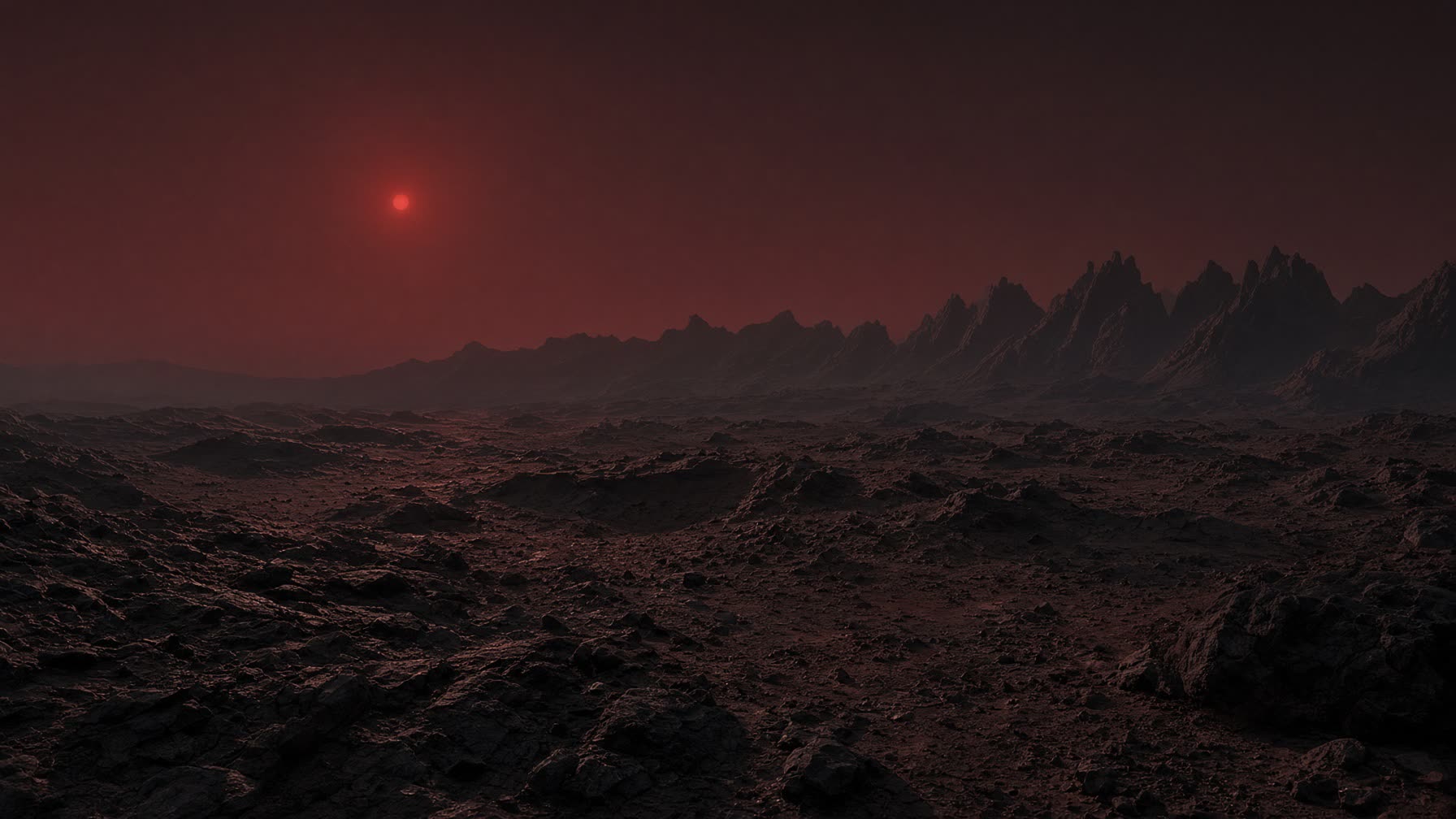
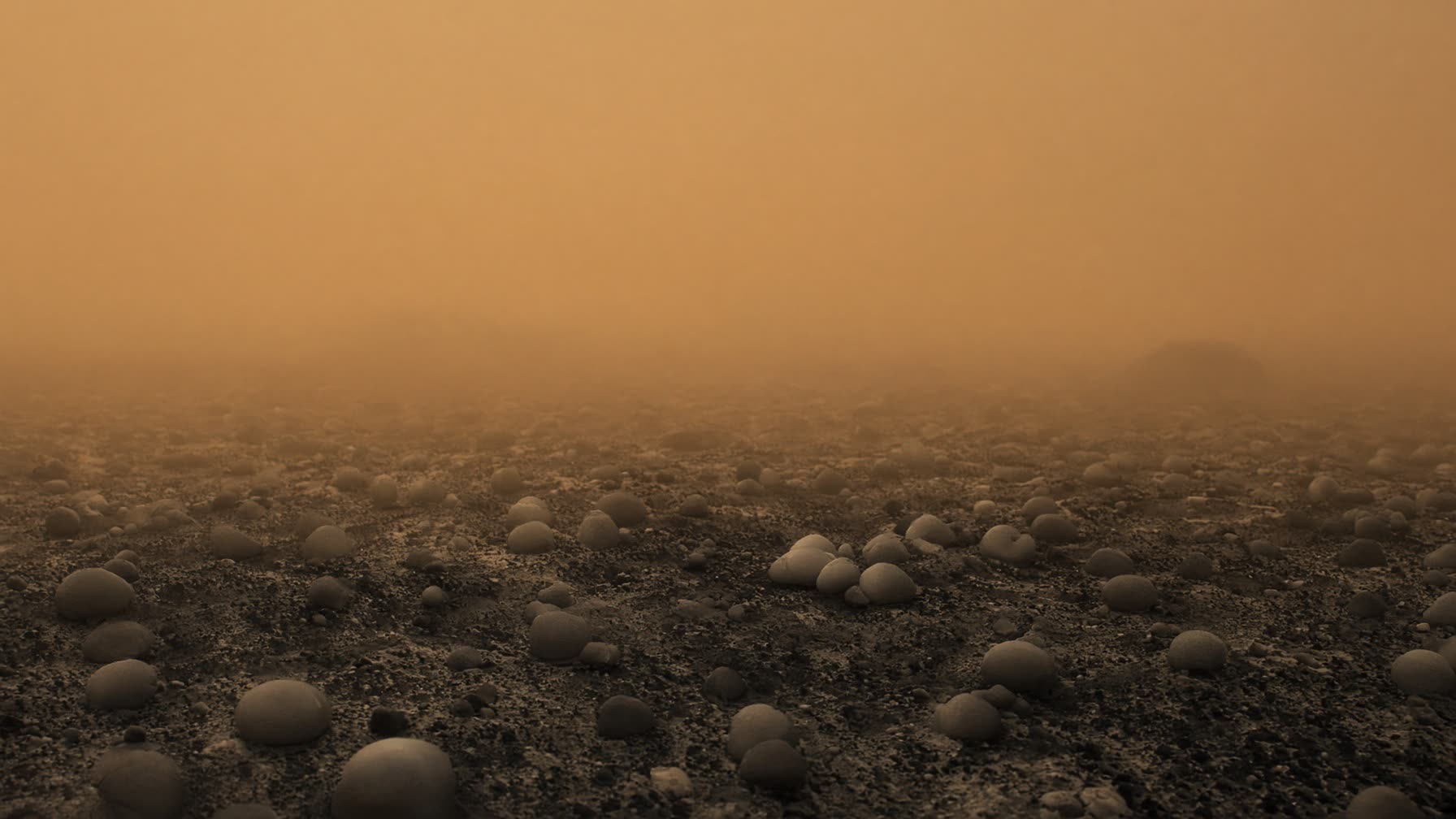
This picture is an artist concept, not a photograph.
Words Eve reads
Titan. Orange sky. Soft ground. You could walk, in a suit, in a kind of air. Could people live there? Not as we are. You would still need a warm, sealed home and a different kind of air to breathe. The cold is near -179 C. Could life exist there? Unknown. Titan has a dense nitrogen atmosphere and a methane cycle. That is interesting chemistry, not a finding of life.
First look
Orange sky. Soft ground. You could walk, in a suit, in a kind of air.
Could people live there?
Not as we are. You would still need a warm, sealed home and a different kind of air to breathe. The cold is near -179 C.
This is the present scientific picture.
Could life exist there?
Unknown. Titan has a dense nitrogen atmosphere and a methane cycle. That is interesting chemistry, not a finding of life.
We do not know yet.
Where
A moon of Saturn.
Look closer
Huygens landed in 2005. Rounded pebbles of ice. Dim Sun. Weather of methane. Pressure like swimming about 15 meters down in Earth's ocean, and still not a human climate.
How we know
Huygens landed in 2005. Rounded ice pebbles. Dim Sun. Weather of methane.
A moon of Saturn.
Light-time from Earth is more than an hour when Saturn is far.
We measured this.
A gentle pull.
About 0.14 g
We measured this.
Thick. Not ours.
About 1.45 atm. Mostly nitrogen, with methane.
NASA: about 60 percent greater than Earth's surface pressure.
We measured this.
So cold that ice is rock.
About -179 C
We measured this.
Long, and locked to Saturn.
About 16 Earth days
We measured this.
Water ice as stone. Methane as rain.
No liquid water on the surface. Hydrocarbon lakes.
We have seen this.
The thick air helps.
Atmosphere provides more shielding than airless moons.
This is the best reading of the evidence.
What this world gives
A thick atmosphere, weather, lakes and rivers of liquid methane, and a surface a probe has already touched.
What is missing
Oxygen air, warmth a body can use, liquid water on the surface, and Earth chemistry for food.
What could we build?
If a body cannot live in the open, a habitat is the next question. Engineering can try to rebuild pieces of Earth. Gravity, distance, and a world's own chemistry still remain.
Keep looking
Do not confuse Earth-like pressure with Earth-like habitability. Titan is a lesson in that single mistake.
Surface pressure is about 1.45 atmospheres, higher than Earth's. That does not make the air breathable. It is nitrogen and methane at a temperature where water ice plays the role of rock.
What we do not know yet. Whether Titan's chemistry ever crosses into life. Cassini-Huygens mapped a world. It did not finish the question.
A way back into the real
Breathe out on a cold window. The fog is water. On Titan, the rain is methane.
Sources dated 2025-04. Science changes. We date it.
Europa, Titan, and TRAPPIST-1e keep this same order on their own pages. Companion worlds: Europa, Titan, TRAPPIST-1e.
Other worlds as tests
Same question. Different air. The pictures are photographs of worlds. Size lives in the story, not as a bar on the picture.